Massive vulvar edema is an uncommon but distressing complication during pregnancy, most frequently associated with preeclampsia with severe features, and can result in significant maternal discomfort, functional impairment, urinary obstruction, and difficulty with obstetric assessment. Although conservative management-such as pelvic elevation, cold compresses, and analgesia-is typically the first-line approach, severe cases may necessitate alternative interventions. We report the case of a 30-year-old primigravida at 33+1 weeks’ gestation who presented with sudden-onset, rapidly progressive vulvar swelling over two days, accompanied by severe pain, inability to abduct the thighs, difficulty walking, urinary retention, persistent headache, and blurred vision. On examination, her blood pressure was 170/110 mmHg with significant proteinuria, fulfilling criteria for preeclampsia with severe features. Initial management included antihypertensive therapy, magnesium sulfate for seizure prophylaxis, and dexamethasone for fetal lung maturation. Conservative measures failed to relieve the swelling, and urinary catheterization was impossible due to extreme edema. Multiple superficial needle fenestrations (“needle prickering”) were performed under sterile conditions, resulting in immediate decompression of the vulvar tissue, enabling catheter placement, and providing rapid relief of pain and improved mobility. The patient was managed expectantly until spontaneous labor at 34 weeks, delivering a 1700 g female neonate with good Apgar scores, and both mother and newborn were discharged in stable condition. This case demonstrates that needle fenestration is a simple, minimally invasive, and effective intervention for rapid decompression in severe vulvar edema associated with preeclampsia when conservative measures fail, and highlights its potential value as a supportive measure in selected patients.
This is an Open Access article, distributed under the terms of the Creative Commons Attribution 4.0 International License (http://creativecommons.org/licenses/by/4.0/), which permits unrestricted use, distribution and reproduction in any medium or format, provided the original work is properly cited.
Massive vulvar edema is a rare but distressing complication of pregnancy, most frequently reported in association with preeclampsia with severe features. Its pathophysiology is multifactorial and is primarily attributed to widespread endothelial dysfunction, increased capillary permeability, and reduced intravascular oncotic pressure secondary to hypoalbuminemia
[1]
Endomba FTA, Nkeck JR. Massive vulvar edema complicating a severe preeclampsia with intrauterine fetal death. Gynecol Obstet (Sunnyvale). 2017; 7: 10.
. These processes promote disproportionate fluid extravasation into dependent tissues such as the vulva, where loose connective tissue allows rapid accumulation of edema. Although uncommon, the resulting swelling can be dramatic and may cause substantial functional impairment, including severe pain, difficulty walking, inability to abduct the thighs, urinary retention, and challenges in performing pelvic examinations or proceeding with vaginal delivery
[2]
Ngowa JDK, Kasia JM, Damtheou S, Ashuntantang G, Toukam M, Mawamba YN, Vlastos AT. Massive vulvar edema in a woman with severe preeclampsia: a case report and review of literature. Clinics in Mother Child Health. 2010; 7.
The exact incidence remains unknown because most descriptions arise from single case reports or small observational studies
[3]
El Fazazi H, Benabdejlil Y, Achenani M, Kouach J, Moussaoui D, Dehayni M. Isolated massive vulval edema in pregnancy: a case report. Int J Innov Appl Stud. 2014; 7(2): 631–3.
. Beyond hypertensive disorders, vulvar edema has also been associated with prolonged or obstructed labor, multifetal gestation, maternal anemia, poorly controlled diabetes, aggressive tocolytic therapy, pelvic infections, inflammatory dermatoses, and lymphatic obstruction
[3]
El Fazazi H, Benabdejlil Y, Achenani M, Kouach J, Moussaoui D, Dehayni M. Isolated massive vulval edema in pregnancy: a case report. Int J Innov Appl Stud. 2014; 7(2): 631–3.
Baidada A, Chater S, Laaboub K, Kharbach A, Lakhdar A, Douraidi N. Vulvar edema with severe preeclampsia: case report. Asian Res J Gynaecol Obstet. 2022; 5(1): 195–7.
[3, 4]
. In some cases, progressive vulvar swelling may mirror worsening systemic pathology-such as increasing ascites, rising blood pressure, or deteriorating protein levels-serving as an external indicator of underlying disease severity
[1]
Endomba FTA, Nkeck JR. Massive vulvar edema complicating a severe preeclampsia with intrauterine fetal death. Gynecol Obstet (Sunnyvale). 2017; 7: 10.
Ngowa JDK, Kasia JM, Damtheou S, Ashuntantang G, Toukam M, Mawamba YN, Vlastos AT. Massive vulvar edema in a woman with severe preeclampsia: a case report and review of literature. Clinics in Mother Child Health. 2010; 7.
Because massive vulvar edema can severely affect maternal comfort, compromise voiding, and impede essential obstetric care, timely identification and tailored management are crucial
[1]
Endomba FTA, Nkeck JR. Massive vulvar edema complicating a severe preeclampsia with intrauterine fetal death. Gynecol Obstet (Sunnyvale). 2017; 7: 10.
Ngowa JDK, Kasia JM, Damtheou S, Ashuntantang G, Toukam M, Mawamba YN, Vlastos AT. Massive vulvar edema in a woman with severe preeclampsia: a case report and review of literature. Clinics in Mother Child Health. 2010; 7.
. Conservative measures often suffice; however, when they fail and functional obstruction occurs, minimally invasive decompressive techniques may be necessary
[3]
El Fazazi H, Benabdejlil Y, Achenani M, Kouach J, Moussaoui D, Dehayni M. Isolated massive vulval edema in pregnancy: a case report. Int J Innov Appl Stud. 2014; 7(2): 631–3.
Baidada A, Chater S, Laaboub K, Kharbach A, Lakhdar A, Douraidi N. Vulvar edema with severe preeclampsia: case report. Asian Res J Gynaecol Obstet. 2022; 5(1): 195–7.
[3, 4]
. Here, we present a case of massive vulvar edema in a primigravida with preeclampsia with severe features that was successfully managed with needle prickering after failure of conventional supportive measures
[5]
Bracero LA, Didomenico A. Massive vulvar edema complicating preeclampsia: a management dilemma. J Perinatol. 1991; 11(2): 122–5.
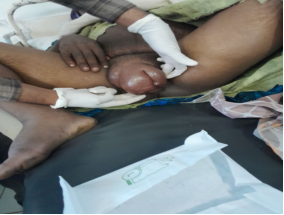
A 30-year-old primigravida at 33+1 weeks of gestation presented with sudden-onset, progressively worsening vulvar swelling of two days’ duration. The swelling was associated with severe pain, inability to abduct the thighs, difficulty walking, and urinary retention. She also reported persistent frontal headache and blurred vision that were not relieved by analgesics.
On admission, her blood pressure was 170/110 mmHg, and urinalysis revealed significant proteinuria, fulfilling the diagnostic criteria for preeclampsia with severe features. Obstetric ultrasound demonstrated a viable singleton fetus corresponding to 32+6 weeks’ gestation, with cephalic presentation, normal amniotic fluid volume, and adequate fetal movements.
Initial management included antihypertensive therapy, magnesium sulfate for seizure prophylaxis, and dexamethasone for fetal lung maturation. Laboratory tests showed normal liver and renal function with no evidence of HELLP syndrome.
Conservative measures for the vulvar edema-pelvic elevation, cold compresses, and analgesics-were attempted but did not lead to improvement. Urinary catheterization was unsuccessful due to the tense swelling and severe tissue distension.
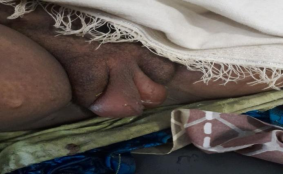
Given the patient’s severe pain, urinary obstruction, and lack of response to supportive treatment, needle pricking (multiple superficial needle fenestrations) was performed under sterile conditions. This intervention resulted in immediate decompression of the vulvar tissues, marked reduction in edema, and successful catheterization. The patient experienced significant relief of pain and improvement in mobility.
Because her blood pressure stabilized and she remained at early preterm gestation, expectant management was continued. Over the subsequent three days, the vulvar edema progressively regressed without recurrence, bleeding, or infection.
At 34 weeks’ gestation, she went into spontaneous labor and delivered a 1700-gram female neonate with good Apgar scores. Both the mother and newborn remained stable postpartum. They were discharged after an additional 48-hour observation period in good condition and were scheduled for routine postpartum follow-up.
Figure 1. Anterior View Showing Massive, Tense Vulvar Edema Involving Both Labia Majora and Minora, Causing Immobility and Difficulty in Ambulation. The Image is Anonymized.
Figure 2. Marked Reduction in Vulvar Edema Following Needle Pricking (Multiple Superficial Needle Fenestrations). The Tissues Appear Decompressed with Improved Anatomical Contour.
Ethics Approval and Consent to Participate
Ethical approval for this study was obtained from the Institutional Review Board of Debre Berhan University, Ethiopia. Written informed consent to participate was obtained from the patient.
3. Discussion
Massive vulvar edema is a very rare obstetric complication, but wen it occurs in the setting of preeclampsia, it may serve as a clinical red flag indicating severe systemic disease
[1]
Endomba FTA, Nkeck JR. Massive vulvar edema complicating a severe preeclampsia with intrauterine fetal death. Gynecol Obstet (Sunnyvale). 2017; 7: 10.
Ngowa JDK, Kasia JM, Damtheou S, Ashuntantang G, Toukam M, Mawamba YN, Vlastos AT. Massive vulvar edema in a woman with severe preeclampsia: a case report and review of literature. Clinics in Mother Child Health. 2010; 7.
Bermejo Martín JF, Martín Fernández M, López Mestanza C, Duque P, Almansa R. Shared features of endothelial dysfunction in sepsis and chronic disease: relevance to preeclampsia (vascular leakage, permeability).
. Multiple case reports and small series have documented its occurrence in women with hypertensive disorders of pregnancy, underlining both its rarity and its clinical importance
[2]
Ngowa JDK, Kasia JM, Damtheou S, Ashuntantang G, Toukam M, Mawamba YN, Vlastos AT. Massive vulvar edema in a woman with severe preeclampsia: a case report and review of literature. Clinics in Mother Child Health. 2010; 7.
Baidada A, Chater S, Laaboub K, Kharbach A, Lakhdar A, Douraidi N. Vulvar edema with severe preeclampsia: case report. Asian Res J Gynaecol Obstet. 2022; 5(1): 195–7.
[8]
Bermejo Martín JF, Martín Fernández M, López Mestanza C, Duque P, Almansa R. Shared features of endothelial dysfunction in sepsis and chronic disease: relevance to preeclampsia (vascular leakage, permeability).
Denis A, Merviel P, Janky E. Management of vulvar edema associated with severe preeclampsia: case series and literature review. J Obstet Gynaecol Res. 2020; 46(4): 620–5.
The underlying mechanisms of massive vulvar edema in preeclampsia are multifactorial. Endothelial dysfunction is central: preeclampsia is characterized by widespread activation and injury of maternal vascular endothelium, leading to increased capillary permeability and plasma leakage into the interstitial space. This “capillary leak” state is compounded by hypoalbuminemia, which reduces plasma oncotic pressure and further favors fluid extravasation. The vulva is particularly susceptible because its tissues contain loose connective tissue and a rich interstitial matrix, making it a dependent site where fluid can accumulate more easily
[8]
Bermejo Martín JF, Martín Fernández M, López Mestanza C, Duque P, Almansa R. Shared features of endothelial dysfunction in sepsis and chronic disease: relevance to preeclampsia (vascular leakage, permeability).
Adkins K, Thomas L, Rivera S. Pathophysiologic mechanisms of fluid overload in hypertensive disorders of pregnancy. Hypertens Pregnancy. 2018; 37(3): 133–40.
Additional factors may contribute. Venous and lymphatic stasis due to increased intra-abdominal pressure from the gravid uterus may impair fluid return. Mechanical compression of pelvic veins, especially in late pregnancy, may exacerbate the transudation of fluid into vulvar tissues
[3]
El Fazazi H, Benabdejlil Y, Achenani M, Kouach J, Moussaoui D, Dehayni M. Isolated massive vulval edema in pregnancy: a case report. Int J Innov Appl Stud. 2014; 7(2): 631–3.
Adkins K, Thomas L, Rivera S. Pathophysiologic mechanisms of fluid overload in hypertensive disorders of pregnancy. Hypertens Pregnancy. 2018; 37(3): 133–40.
. In some cases, ascites has been reported concurrently, suggesting generalized capillary leak
[10]
Adkins K, Thomas L, Rivera S. Pathophysiologic mechanisms of fluid overload in hypertensive disorders of pregnancy. Hypertens Pregnancy. 2018; 37(3): 133–40.
Moreover, hormonal changes in pregnancy, including elevated estrogen and activation of the renin-angiotensin-aldosterone system, may influence vascular permeability and volume homeostasis, favoring edema formation
[10]
Adkins K, Thomas L, Rivera S. Pathophysiologic mechanisms of fluid overload in hypertensive disorders of pregnancy. Hypertens Pregnancy. 2018; 37(3): 133–40.
. In preeclampsia, dysregulation of these systems can further worsen fluid balance
[10]
Adkins K, Thomas L, Rivera S. Pathophysiologic mechanisms of fluid overload in hypertensive disorders of pregnancy. Hypertens Pregnancy. 2018; 37(3): 133–40.
3.1. Clinical Presentation and Literature Comparison
The clinical presentation in this case-rapidly progressive, tense vulvar swelling, severe pain, impaired mobility, and urinary retention-is consistent with prior reports. For example, a 17-year-old primiparous woman with preeclampsia and massive vulvar edema developed ascites and worsening hypertension, and her edema correlated with the severity of her preeclampsia
[2]
Ngowa JDK, Kasia JM, Damtheou S, Ashuntantang G, Toukam M, Mawamba YN, Vlastos AT. Massive vulvar edema in a woman with severe preeclampsia: a case report and review of literature. Clinics in Mother Child Health. 2010; 7.
El Fazazi H, Benabdejlil Y, Achenani M, Kouach J, Moussaoui D, Dehayni M. Isolated massive vulval edema in pregnancy: a case report. Int J Innov Appl Stud. 2014; 7(2): 631–3.
. Another case described two patients with preeclamptic vulvar edema that did not respond to medical therapy; both required cesarean delivery, and mechanical drainage was suggested as an adjunct when termination was not urgent
[9]
Denis A, Merviel P, Janky E. Management of vulvar edema associated with severe preeclampsia: case series and literature review. J Obstet Gynaecol Res. 2020; 46(4): 620–5.
In other series, topical therapies such as cold application, elevation, and local dressings have been employed
[10]
Adkins K, Thomas L, Rivera S. Pathophysiologic mechanisms of fluid overload in hypertensive disorders of pregnancy. Hypertens Pregnancy. 2018; 37(3): 133–40.
. In a Turkish report, Bilateral massive vulvar edema in severe preeclampsia was managed initially with elevation, cold compresses, and topical creams, with small skin incisions used in resistant cases
[10]
Adkins K, Thomas L, Rivera S. Pathophysiologic mechanisms of fluid overload in hypertensive disorders of pregnancy. Hypertens Pregnancy. 2018; 37(3): 133–40.
. In a Moroccan report, Talib et al. described severe preeclampsia with vulvar edema, managed by controlling blood pressure, delivery, and local care; the edema resolved in the postpartum period
[4]
Baidada A, Chater S, Laaboub K, Kharbach A, Lakhdar A, Douraidi N. Vulvar edema with severe preeclampsia: case report. Asian Res J Gynaecol Obstet. 2022; 5(1): 195–7.
[4]
.
Some reports link vulvar edema as a poor prognostic sign. For instance, in a Cameroonian patient with severe preeclampsia and intrauterine fetal death, massive vulvar edema was one of the features, and resolution occurred only after delivery
[1]
Endomba FTA, Nkeck JR. Massive vulvar edema complicating a severe preeclampsia with intrauterine fetal death. Gynecol Obstet (Sunnyvale). 2017; 7: 10.
. In an earlier report by Ngowa et al., a primigravida with severe preeclampsia developed massive vulvar edema, and although her blood pressure normalized in postpartum, the authors cautioned clinicians that vulvar edema may indicate a more severe disease course
[2]
Ngowa JDK, Kasia JM, Damtheou S, Ashuntantang G, Toukam M, Mawamba YN, Vlastos AT. Massive vulvar edema in a woman with severe preeclampsia: a case report and review of literature. Clinics in Mother Child Health. 2010; 7.
Beyond preeclampsia, vulvar edema in pregnancy has also been linked to other etiologies. El Fazazi et al. reported massive vulval edema in a twin pregnancy without preeclampsia, associated instead with severe hypoproteinemia and anemia
[3]
El Fazazi H, Benabdejlil Y, Achenani M, Kouach J, Moussaoui D, Dehayni M. Isolated massive vulval edema in pregnancy: a case report. Int J Innov Appl Stud. 2014; 7(2): 631–3.
. In a younger patient, spontaneous vulvar edema appeared after tocolysis therapy in the third trimester; the authors treated her with corticosteroids, antibiotics, and analgesics, resulting in resolution
[3]
El Fazazi H, Benabdejlil Y, Achenani M, Kouach J, Moussaoui D, Dehayni M. Isolated massive vulval edema in pregnancy: a case report. Int J Innov Appl Stud. 2014; 7(2): 631–3.
. These cases highlight that while preeclampsia is a key risk factor, vulvar edema may arise via alternative or additive mechanisms.
3.2. Management
In most reported cases, conservative management is attempted first. These include bed rest, elevation of the pelvis or vulva, cold compresses, analgesia, and local dressings
[10]
Adkins K, Thomas L, Rivera S. Pathophysiologic mechanisms of fluid overload in hypertensive disorders of pregnancy. Hypertens Pregnancy. 2018; 37(3): 133–40.
Patel A, Singh R, Sharma P. Management of severe vulvar edema in pregnancy: a systematic review of conservative and interventional approaches. Int J Womens Health. 2021; 13: 789–797.
. Such measures aim to reduce fluid transudation and facilitate reabsorption. In the Turkish report, topical steroids and “Eau de Goulard” solution were used to help reduce edema; local antibiotic cream was also applied to prevent secondary infection
[11]
Patel H, Wong K, Lee J. Needle fenestration for refractory vulvar edema: a minimally invasive approach. Case Rep Obstet Gynecol. 2021; 2021: 1–4.
However, when edema becomes tense, functionally obstructive, or associated with urinary retention, conservative therapy may not suffice. In such situations, mechanical drainage has been proposed: small skin incisions or punctures can allow the trapped interstitial fluid to escape, reducing pressure, alleviating pain, and restoring function
[11]
Patel H, Wong K, Lee J. Needle fenestration for refractory vulvar edema: a minimally invasive approach. Case Rep Obstet Gynecol. 2021; 2021: 1–4.
Needle fenestration (“prickering”) represents a minimally invasive version of this approach. Although not yet widely reported, it offers a rapid method to decompress the edematous tissues, relieve tension, and permit catheterization – as was done in this patient. The safety profile appears favorable: in prior case series, mechanical drainage was not associated with significant bleeding or infection when performed carefully
[11]
Patel H, Wong K, Lee J. Needle fenestration for refractory vulvar edema: a minimally invasive approach. Case Rep Obstet Gynecol. 2021; 2021: 1–4.
In addition to local management, treating the underlying preeclampsia is essential. Blood pressure control, seizure prophylaxis, and monitoring for end-organ complications remain the backbone of management
[13]
Brown MA, Magee LA, Kenny LC, et al. Hypertensive disorders of pregnancy: ISSHP classification, diagnosis & management recommendations. Pregnancy Hypertens. 2018; 13: 291–310.
. In cases where maternal or fetal status deteriorates, delivery may be required; indeed, many reported cases underwent cesarean section or induction as soon as clinically feasible
[1]
Endomba FTA, Nkeck JR. Massive vulvar edema complicating a severe preeclampsia with intrauterine fetal death. Gynecol Obstet (Sunnyvale). 2017; 7: 10.
Ngowa JDK, Kasia JM, Damtheou S, Ashuntantang G, Toukam M, Mawamba YN, Vlastos AT. Massive vulvar edema in a woman with severe preeclampsia: a case report and review of literature. Clinics in Mother Child Health. 2010; 7.
Denis A, Merviel P, Janky E. Management of vulvar edema associated with severe preeclampsia: case series and literature review. J Obstet Gynaecol Res. 2020; 46(4): 620–5.
This case underscores that massive vulvar edema in a patient with preeclampsia should not be dismissed as a benign finding. Rather, it may reflect a severe capillary leak syndrome, poor oncotic reserve, or venous/lymphatic compromise Recognition of this manifestation should prompt close monitoring, aggressive management of preeclampsia, and consideration of decompressive interventions if conservative measures fail
[1]
Endomba FTA, Nkeck JR. Massive vulvar edema complicating a severe preeclampsia with intrauterine fetal death. Gynecol Obstet (Sunnyvale). 2017; 7: 10.
Ngowa JDK, Kasia JM, Damtheou S, Ashuntantang G, Toukam M, Mawamba YN, Vlastos AT. Massive vulvar edema in a woman with severe preeclampsia: a case report and review of literature. Clinics in Mother Child Health. 2010; 7.
Needle fenestration can be a practical, safe, and efficient intervention in resource-limited settings, especially when catheterization or pelvic access is impaired by the edema. Given its minimally invasive nature, it looks promising as a supportive tool in the management armamentarium
[11]
Patel H, Wong K, Lee J. Needle fenestration for refractory vulvar edema: a minimally invasive approach. Case Rep Obstet Gynecol. 2021; 2021: 1–4.
Denis A, Merviel P, Janky E. Management of vulvar edema associated with severe preeclampsia: case series and literature review. J Obstet Gynaecol Res. 2020; 46(4): 620–5.
. Aggregating data across centers may help clarify risk factors, optimal timing for intervention, and long-term outcomes
[2]
Ngowa JDK, Kasia JM, Damtheou S, Ashuntantang G, Toukam M, Mawamba YN, Vlastos AT. Massive vulvar edema in a woman with severe preeclampsia: a case report and review of literature. Clinics in Mother Child Health. 2010; 7.
Baidada A, Chater S, Laaboub K, Kharbach A, Lakhdar A, Douraidi N. Vulvar edema with severe preeclampsia: case report. Asian Res J Gynaecol Obstet. 2022; 5(1): 195–7.
[9]
Denis A, Merviel P, Janky E. Management of vulvar edema associated with severe preeclampsia: case series and literature review. J Obstet Gynaecol Res. 2020; 46(4): 620–5.
A limitation in this discussion-and in the literature overall-is the lack of controlled or prospective studies on vulvar edema in pregnancy. Most evidence remains anecdotal. There is also a lack of standardized protocols for decompression (needle fenestration vs. incision vs. conservative measures) and few reports on long-term outcomes.
Future research should aim to develop a registry of such cases, encourage prospective data collection, and evaluate the safety and efficacy of decompressive interventions in larger cohorts. Basic science studies investigating vascular permeability, lymphatic function, and tissue biomechanics in the vulva during preeclampsia may also provide valuable mechanistic insights.
4. Conclusion
Massive vulvar edema is an uncommon but clinically significant complication in pregnancy that can lead to severe pain, impaired mobility, urinary retention, and challenges in obstetric assessment. Although conservative management-including pelvic elevation, cold compresses, and analgesia-remains the first-line approach, it may be insufficient in cases with tense, functionally obstructive swelling. This case demonstrates that needle fenestration (“needle prickering”) is a simple, minimally invasive, and effective technique for rapid decompression of edematous vulvar tissue. The procedure can relieve pain, restore mobility, and facilitate necessary interventions such as urinary catheterization without significant complications when performed under sterile conditions.
Importantly, management of the underlying maternal condition-particularly preeclampsia with severe features-is critical for sustained improvement and prevention of recurrence. In patients whose systemic condition stabilizes, expectant management can be safely pursued even in early preterm gestations, allowing for improved neonatal outcomes.
This report highlights the importance of recognizing massive vulvar edema as both a functional and potentially prognostic manifestation of severe preeclampsia. Early identification, appropriate supportive care, and timely intervention-such as needle pricking when indicated-can reduce maternal discomfort, prevent procedural delays, and improve both maternal and neonatal outcomes. Further reporting and aggregation of similar cases will help establish standardized management strategies for this rare obstetric complication.
The authors sincerely thank the patient for her cooperation and consent, as well as the healthcare staff involved in her care, for their support and contributions.
Ngowa JDK, Kasia JM, Damtheou S, Ashuntantang G, Toukam M, Mawamba YN, Vlastos AT. Massive vulvar edema in a woman with severe preeclampsia: a case report and review of literature. Clinics in Mother Child Health. 2010; 7.
El Fazazi H, Benabdejlil Y, Achenani M, Kouach J, Moussaoui D, Dehayni M. Isolated massive vulval edema in pregnancy: a case report. Int J Innov Appl Stud. 2014; 7(2): 631–3.
Baidada A, Chater S, Laaboub K, Kharbach A, Lakhdar A, Douraidi N. Vulvar edema with severe preeclampsia: case report. Asian Res J Gynaecol Obstet. 2022; 5(1): 195–7.
[5]
Bracero LA, Didomenico A. Massive vulvar edema complicating preeclampsia: a management dilemma. J Perinatol. 1991; 11(2): 122–5.
Bermejo Martín JF, Martín Fernández M, López Mestanza C, Duque P, Almansa R. Shared features of endothelial dysfunction in sepsis and chronic disease: relevance to preeclampsia (vascular leakage, permeability).
Denis A, Merviel P, Janky E. Management of vulvar edema associated with severe preeclampsia: case series and literature review. J Obstet Gynaecol Res. 2020; 46(4): 620–5.
Adkins K, Thomas L, Rivera S. Pathophysiologic mechanisms of fluid overload in hypertensive disorders of pregnancy. Hypertens Pregnancy. 2018; 37(3): 133–40.
Patel A, Singh R, Sharma P. Management of severe vulvar edema in pregnancy: a systematic review of conservative and interventional approaches. Int J Womens Health. 2021; 13: 789–797.
Beyazn, S., Belete, A. (2025). Massive Vulvar Edema in a Patient with Preeclampsia with Severe Features Managed with Needle Fenestration: A Case Report. Medicine and Health Sciences, 2(1), 10-14. https://doi.org/10.11648/j.mhs.20260201.12
Beyazn, S.; Belete, A. Massive Vulvar Edema in a Patient with Preeclampsia with Severe Features Managed with Needle Fenestration: A Case Report. Med. Health Sci.2025, 2(1), 10-14. doi: 10.11648/j.mhs.20260201.12
Beyazn S, Belete A. Massive Vulvar Edema in a Patient with Preeclampsia with Severe Features Managed with Needle Fenestration: A Case Report. Med Health Sci. 2025;2(1):10-14. doi: 10.11648/j.mhs.20260201.12
@article{10.11648/j.mhs.20260201.12,
  author = {Sisay Beyazn and Awoke Belete},
  title = {Massive Vulvar Edema in a Patient with Preeclampsia with Severe Features Managed with Needle Fenestration: A Case Report},
  journal = {Medicine and Health Sciences},
  volume = {2},
  number = {1},
  pages = {10-14},
  doi = {10.11648/j.mhs.20260201.12},
  url = {https://doi.org/10.11648/j.mhs.20260201.12},
  eprint = {https://article.sciencepublishinggroup.com/pdf/10.11648.j.mhs.20260201.12},
  abstract = {Massive vulvar edema is an uncommon but distressing complication during pregnancy, most frequently associated with preeclampsia with severe features, and can result in significant maternal discomfort, functional impairment, urinary obstruction, and difficulty with obstetric assessment. Although conservative management-such as pelvic elevation, cold compresses, and analgesia-is typically the first-line approach, severe cases may necessitate alternative interventions. We report the case of a 30-year-old primigravida at 33+1 weeks’ gestation who presented with sudden-onset, rapidly progressive vulvar swelling over two days, accompanied by severe pain, inability to abduct the thighs, difficulty walking, urinary retention, persistent headache, and blurred vision. On examination, her blood pressure was 170/110 mmHg with significant proteinuria, fulfilling criteria for preeclampsia with severe features. Initial management included antihypertensive therapy, magnesium sulfate for seizure prophylaxis, and dexamethasone for fetal lung maturation. Conservative measures failed to relieve the swelling, and urinary catheterization was impossible due to extreme edema. Multiple superficial needle fenestrations (“needle prickering”) were performed under sterile conditions, resulting in immediate decompression of the vulvar tissue, enabling catheter placement, and providing rapid relief of pain and improved mobility. The patient was managed expectantly until spontaneous labor at 34 weeks, delivering a 1700 g female neonate with good Apgar scores, and both mother and newborn were discharged in stable condition. This case demonstrates that needle fenestration is a simple, minimally invasive, and effective intervention for rapid decompression in severe vulvar edema associated with preeclampsia when conservative measures fail, and highlights its potential value as a supportive measure in selected patients.},
 year = {2025}
}
TY  - JOUR
T1  - Massive Vulvar Edema in a Patient with Preeclampsia with Severe Features Managed with Needle Fenestration: A Case Report
AU  - Sisay Beyazn
AU  - Awoke Belete
Y1  - 2025/12/29
PY  - 2025
N1  - https://doi.org/10.11648/j.mhs.20260201.12
DO  - 10.11648/j.mhs.20260201.12
T2  - Medicine and Health Sciences
JF  - Medicine and Health Sciences
JO  - Medicine and Health Sciences
SP  - 10
EP  - 14
PB  - Science Publishing Group
SN  - 3070-6300
UR  - https://doi.org/10.11648/j.mhs.20260201.12
AB  - Massive vulvar edema is an uncommon but distressing complication during pregnancy, most frequently associated with preeclampsia with severe features, and can result in significant maternal discomfort, functional impairment, urinary obstruction, and difficulty with obstetric assessment. Although conservative management-such as pelvic elevation, cold compresses, and analgesia-is typically the first-line approach, severe cases may necessitate alternative interventions. We report the case of a 30-year-old primigravida at 33+1 weeks’ gestation who presented with sudden-onset, rapidly progressive vulvar swelling over two days, accompanied by severe pain, inability to abduct the thighs, difficulty walking, urinary retention, persistent headache, and blurred vision. On examination, her blood pressure was 170/110 mmHg with significant proteinuria, fulfilling criteria for preeclampsia with severe features. Initial management included antihypertensive therapy, magnesium sulfate for seizure prophylaxis, and dexamethasone for fetal lung maturation. Conservative measures failed to relieve the swelling, and urinary catheterization was impossible due to extreme edema. Multiple superficial needle fenestrations (“needle prickering”) were performed under sterile conditions, resulting in immediate decompression of the vulvar tissue, enabling catheter placement, and providing rapid relief of pain and improved mobility. The patient was managed expectantly until spontaneous labor at 34 weeks, delivering a 1700 g female neonate with good Apgar scores, and both mother and newborn were discharged in stable condition. This case demonstrates that needle fenestration is a simple, minimally invasive, and effective intervention for rapid decompression in severe vulvar edema associated with preeclampsia when conservative measures fail, and highlights its potential value as a supportive measure in selected patients.
VL  - 2
IS  - 1
ER  -
Beyazn, S., Belete, A. (2025). Massive Vulvar Edema in a Patient with Preeclampsia with Severe Features Managed with Needle Fenestration: A Case Report. Medicine and Health Sciences, 2(1), 10-14. https://doi.org/10.11648/j.mhs.20260201.12
Beyazn, S.; Belete, A. Massive Vulvar Edema in a Patient with Preeclampsia with Severe Features Managed with Needle Fenestration: A Case Report. Med. Health Sci.2025, 2(1), 10-14. doi: 10.11648/j.mhs.20260201.12
Beyazn S, Belete A. Massive Vulvar Edema in a Patient with Preeclampsia with Severe Features Managed with Needle Fenestration: A Case Report. Med Health Sci. 2025;2(1):10-14. doi: 10.11648/j.mhs.20260201.12
@article{10.11648/j.mhs.20260201.12,
  author = {Sisay Beyazn and Awoke Belete},
  title = {Massive Vulvar Edema in a Patient with Preeclampsia with Severe Features Managed with Needle Fenestration: A Case Report},
  journal = {Medicine and Health Sciences},
  volume = {2},
  number = {1},
  pages = {10-14},
  doi = {10.11648/j.mhs.20260201.12},
  url = {https://doi.org/10.11648/j.mhs.20260201.12},
  eprint = {https://article.sciencepublishinggroup.com/pdf/10.11648.j.mhs.20260201.12},
  abstract = {Massive vulvar edema is an uncommon but distressing complication during pregnancy, most frequently associated with preeclampsia with severe features, and can result in significant maternal discomfort, functional impairment, urinary obstruction, and difficulty with obstetric assessment. Although conservative management-such as pelvic elevation, cold compresses, and analgesia-is typically the first-line approach, severe cases may necessitate alternative interventions. We report the case of a 30-year-old primigravida at 33+1 weeks’ gestation who presented with sudden-onset, rapidly progressive vulvar swelling over two days, accompanied by severe pain, inability to abduct the thighs, difficulty walking, urinary retention, persistent headache, and blurred vision. On examination, her blood pressure was 170/110 mmHg with significant proteinuria, fulfilling criteria for preeclampsia with severe features. Initial management included antihypertensive therapy, magnesium sulfate for seizure prophylaxis, and dexamethasone for fetal lung maturation. Conservative measures failed to relieve the swelling, and urinary catheterization was impossible due to extreme edema. Multiple superficial needle fenestrations (“needle prickering”) were performed under sterile conditions, resulting in immediate decompression of the vulvar tissue, enabling catheter placement, and providing rapid relief of pain and improved mobility. The patient was managed expectantly until spontaneous labor at 34 weeks, delivering a 1700 g female neonate with good Apgar scores, and both mother and newborn were discharged in stable condition. This case demonstrates that needle fenestration is a simple, minimally invasive, and effective intervention for rapid decompression in severe vulvar edema associated with preeclampsia when conservative measures fail, and highlights its potential value as a supportive measure in selected patients.},
 year = {2025}
}
TY  - JOUR
T1  - Massive Vulvar Edema in a Patient with Preeclampsia with Severe Features Managed with Needle Fenestration: A Case Report
AU  - Sisay Beyazn
AU  - Awoke Belete
Y1  - 2025/12/29
PY  - 2025
N1  - https://doi.org/10.11648/j.mhs.20260201.12
DO  - 10.11648/j.mhs.20260201.12
T2  - Medicine and Health Sciences
JF  - Medicine and Health Sciences
JO  - Medicine and Health Sciences
SP  - 10
EP  - 14
PB  - Science Publishing Group
SN  - 3070-6300
UR  - https://doi.org/10.11648/j.mhs.20260201.12
AB  - Massive vulvar edema is an uncommon but distressing complication during pregnancy, most frequently associated with preeclampsia with severe features, and can result in significant maternal discomfort, functional impairment, urinary obstruction, and difficulty with obstetric assessment. Although conservative management-such as pelvic elevation, cold compresses, and analgesia-is typically the first-line approach, severe cases may necessitate alternative interventions. We report the case of a 30-year-old primigravida at 33+1 weeks’ gestation who presented with sudden-onset, rapidly progressive vulvar swelling over two days, accompanied by severe pain, inability to abduct the thighs, difficulty walking, urinary retention, persistent headache, and blurred vision. On examination, her blood pressure was 170/110 mmHg with significant proteinuria, fulfilling criteria for preeclampsia with severe features. Initial management included antihypertensive therapy, magnesium sulfate for seizure prophylaxis, and dexamethasone for fetal lung maturation. Conservative measures failed to relieve the swelling, and urinary catheterization was impossible due to extreme edema. Multiple superficial needle fenestrations (“needle prickering”) were performed under sterile conditions, resulting in immediate decompression of the vulvar tissue, enabling catheter placement, and providing rapid relief of pain and improved mobility. The patient was managed expectantly until spontaneous labor at 34 weeks, delivering a 1700 g female neonate with good Apgar scores, and both mother and newborn were discharged in stable condition. This case demonstrates that needle fenestration is a simple, minimally invasive, and effective intervention for rapid decompression in severe vulvar edema associated with preeclampsia when conservative measures fail, and highlights its potential value as a supportive measure in selected patients.
VL  - 2
IS  - 1
ER  -





 Share This Article
 Twitter
 Linked In
 Facebook
 Copy
Copy Download