
Background: Essential Nutrition Actions (ENA) is a comprehensive nutrition program during the first 1,000 days of life, from conception to age two. One-fourth of nutrition-related morbidity and mortality rates are caused by inadequate implementation practice of essential nutrition actions. However, some studies conducted predominantly emphasized only rural settings or only urban settings but no studies show the prevalence of ENA practices by comparing urban and rural setting for prioritization of intervention purpose. Therefore, this study sought to close this gap by assessing adherence to essential nutrition action messages and factors associated among mothers of children aged 0-24 months in rural and urban kebeles of the Southern zone. Methods: A community based comparative cross-sectional study was conducted among 466 participants 233 from urban and 233 from rural. A structured interviewer administrated questionnaire was used to collect data. Data was entered into Epi Info and then transported to SPSS for analysis. Descriptive analysis was used to describe the percentages and frequency. During bivariable logistic regression analysis at P value less than 0.25 was candidate variable included in multivariable logistic regression analysis. Statistical significance was declared at P value <0.05 in the multivariable logistic regression model. Result: The study results were found to be 50.2% of urban mothers and 57.1% of rural mother’s demonstrated poor ENA practice. Among urban kebeles prim-parous mothers [AOR=2.580, 95% CI: 1.269-5.245] were associated with poor ENA practices. Among rural kebeles mothers having nutritional counseling during ANC [AOR=0.342, 95% CI: 0.110-1.063] and mothers who are adequate in dietary diversity [AOR=0.267, 95% CI: 0.093- 0.769] was identified as a predictor. Conclusion and recommendation: The study shows that the prevalence of poor ENA practices higher among rural than urban kebeles. All concerned bodies should give community based education about ENA messages (maternal nutrition, breastfeeding, complementary feeding) and counseling to mothers to increase awareness about the importance of nutrition during pregnancy and increase practice of key ENA messages.
| Published in | Medicine and Health Sciences (Volume 2, Issue 1) |
| DOI | 10.11648/j.mhs.20260201.13 |
| Page(s) | 15-27 |
| Creative Commons |
This is an Open Access article, distributed under the terms of the Creative Commons Attribution 4.0 International License (http://creativecommons.org/licenses/by/4.0/), which permits unrestricted use, distribution and reproduction in any medium or format, provided the original work is properly cited. |
| Copyright |
Copyright © The Author(s), 2025. Published by Science Publishing Group |
Essential Nutrition Action Messages, Practices, Mothers, Children, Sidama, Ethiopia
Variables | Confidence level | Power | Ratio | % of Outcome unexposed group | % of Outcome exposed group | Odds ratio | Sample size |
|---|---|---|---|---|---|---|---|
Parity [ 3] | 95% | 80% | 1 | 59.7 | 36.8 | 0.39306 | 166 |
Place of delivery [ 3] | 95% | 80% | 1 | 23.5 | 49.5 | 3.19085 | 122 |
Nutritional counseling during ANC [ 25] | 95% | 80% | 1 | 24.5 | 63 | 5.24711 | 60 |
Abbreviation:- ANC; Antenatal Care | |||||||
Variables | Categories | Urban Frequency (%) | Rural Frequency (%) |
|---|---|---|---|
Sex of the child | Male | 161 (69.1) | 117 (50.2) |
Female | 72 (30.9) | 116 (49.8) | |
Maternal age in year | 20-24 | 14 (6.0) | 57 (24.5) |
25-29 | 51 (21.9) | 67 (28.8) | |
30-34 | 47 (20.2) | 32 (13.7) | |
>=35 | 121 (51.9) | 77 (33.0) | |
Age of the child (month) | > 6 | 84 (36.1) | 72 (30.9) |
6-12 | 69 (29.6) | 64 (27.5) | |
12-18 | 50 (21.5) | 74 (31.8) | |
18-24 | 30 (12.9) | 23 (9.9) | |
Marital status | Single | 18 (7.7) | 14 (6.0) |
Married | 196 (84.1) | 200 (85.8) | |
Divorced | 19 (8.2) | 19 (8.2) | |
Maternal level of education | Unable to read and write | 34 (14.6) | 68 (29.2) |
Able to read and write | 90 (38.6) | 50 (21.5) | |
Completed primary school | 77 (33.0) | 72 (30.9) | |
Completed high school | 20 (8.6) | 23 (9.9) | |
College and above | 12 (5.2) | 20 (8.6) | |
Paternal level of education | Unable to read and write | 62 (26.6) | 61 (26.2) |
Able to read and write | 93 (39.9) | 92 (39.5) | |
Completed primary school | 39 (16.7) | 38 (16.3) | |
Completed high school | 19 (8.2) | 25 (10.7) | |
College and above | 20 (8.6) | 17 (7.3) | |
Occupation of the mothers | Housewife | 178 (76.4) | 165 (70.8) |
Civil servant | 12 (5.2) | 13 (5.6) | |
Employed in private sector | 28 (12.1) | 36 (15.5) | |
Farmer | 15 (6.4) | 19 (8.2) | |
Occupation of the father | Farmer | 176 (75.5) | 144 (61.8) |
Civil servant | 24 (10.3) | 23 (9.9) | |
Merchant | 15 (6.4) | 47 (20.2) | |
Daily laborer | 18 (7.7) | 19 (8.2) | |
Family size | < 4 | 89 (38.2) | 112 (48.1) |
>= 4 | 144 (61.8) | 121 (51.9) | |
Number of under five children in the household | One | 186 (79.8) | 86 (36.9) |
Two or more | 47 (20.2) | 147 (63.1) | |
Religion | Orthodox | 13 (5.6) | 27 (11.6) |
Protestant | 193 (82.8) | 123 (52.8) | |
Muslim | 14 (16.0) | 29 (12.4) | |
Catholic | 13 (5.6) | 54 (23.2) | |
Media exposure | Yes | 31 (13.3) | 46 (19.7) |
No | 202 (86.7) | 187 (80.3) | |
Wealth index | Poor | 84 (36.1) | 75 (32.2) |
Medium | 72 (30.9) | 46 (19.7) | |
Rich | 77 (33.0) | 112 (48.1) |
Variables | Categories | Urban Frequency (%) | Rural Frequency (%) |
|---|---|---|---|
Parity | Multi Para | 183 (78.5) | 201 (86.3) |
Prim Para | 50 (21.5) | 32 (13.7) | |
Antenatal care visits | Zero | 41 (17.6) | 22 (9.4) |
1-3 | 130 (55.8) | 187 (80.3) | |
>= 4 | 62 (26.6) | 24 (10.3) | |
Postnatal care follow-up | Yes | 79 (33.9) | 89 (38.2) |
No | 154 (66.1) | 144 (61.8) | |
Place of delivery | Home | 27 (11.6) | 15 (6.4) |
Health institution | 206 (88.4) | 218 (93.6) |
Variables | Categories | Urban Frequency (%) | Rural Frequency (%) |
|---|---|---|---|
Having nutritional counseling during ANC | Yes | 77 (33.0) | 71 (30.5) |
No | 156 (67.0) | 162 (69.5) | |
Meal frequency per day | <= 2 times | 69 (29.6) | 15 (6.4) |
>2 times | 164 (70.4) | 218 (93.6) | |
Dietary diversity | Adequate | 60 (25.8) | 37 (15.9) |
Inadequate | 173 (74.2) | 196 (84.1) | |
Abbreviation:- ANC; Antenatal Care | |||
Variable | ENA Practice | COR (95% CI) | AOR (95% CI) | P-value | |
|---|---|---|---|---|---|
Poor Frequency (%) | Good Frequency (%) | ||||
Family size (number) | |||||
<4 | 51(57.3) | 38 (42.7) | 1 | 1 | 0.136 |
>=4 | 66(45.8) | 78 (54.2) | 1.6 (0.931-2.702) | 1.56 (0.83-2.802) | |
Number of under- five children | |||||
One | 98 (52.7) | 88 (47.3) | 1 | 1 | |
Two and above | 19 (40.4) | 28 (59.6) | 1.6 (.857-3.143) | 1.63 (0.81 -3.28) | 0.173 |
Parity | |||||
Multi Para | 97 (53.0) | 86 (47.0) | 1 | 1 | |
Prim Para | 20 (40.0) | 30 (60.0) | 1.7 (.896 -3.196) | 2.32 (1.154-4.64) | 0.018 |
Meal frequency per day | |||||
<=2 times | 39 (56.5) | 30 (43.5) | 1 | 1 | |
>2 times | 78 (47.6) | 86 (52.4) | 1.4 (.814 - 2.525) | 1.37 (0.778- 2.71) | 0.242 |
Dietary diversity | |||||
Adequate | 26 (43.3) | 34 (56.7) | 0.7 (0.38-1.245) | 1.56 (0.82-2.989) | 0179 |
Inadequate | 91 (52.6) | 82 (47.4) | 1 | 1 | |
Note: AOR; Adjusted Odds Ratio, COR; Crude Odds Ratio, CI; Confidence Interval | |||||
Variable | ENA Practice | COR (95% CI) | AOR (95% CI) | P-value | |
|---|---|---|---|---|---|
Poor Frequency (%) | Good Frequency (%) | ||||
Media exposure | |||||
Yes | 35 (76.1) | 11 (23.9) | 2.9 (1.385- 6.031) | 1.38(0.489-3.894) | 0.544 |
No | 98 (52.4) | 89 (47.6) | 1 | 1 | |
Wealth Index | |||||
Poor | 37(49.3) | 38 (50.7) | 1.8 (0.982-3.221) | 1.57(0.79-3.130) | 0.197 |
Medium | 25 (54.3) | 21 (45.7) | 1.5 (0.725-2.918) | 1.16(0.548 - 2.46) | 0.699 |
Rich | 71(63.4) | 41 (36.6) | 1 | 1 | |
Parity | |||||
Multi Para | 121(60.2) | 80 (39.8) | 1 | 1 | |
Prim Para | 12 (37.5) | 20 (62.5) | 2.5 (1.168-5.441) | 1.96 (0.85-4.486) | 0.113 |
PNC follow up | |||||
Yes | 63(70.8) | 26 (29.2) | 0.4 (0.223-.685) | 1.38 (0.48-3.949) | 0.550 |
No | 70 (48.6) | 74 (51.4) | 1 | 1 | |
Nutritional counseling during ANC | |||||
Yes | 55 (77.5) | 16 (22.5) | 0.3 (0.143-0.51) | 0.34 (0.11-1.063) | 0.044 |
No | 78 (48.1) | 84 (51.9) | 1 | 1 | |
Dietary diversity | |||||
Adequate | 31(83.8) | 6 (16.2) | 0.2(0.084-0.526) | 0.27(0.093-0.769) | 0.014 |
Inadequate | 102(52.0) | 94 (48.0) | 1 | 1 | |
Note: AOR; Adjusted Odds Ratio, COR; Crude Odds Ratio, CI; Confidence Interval | |||||
ANC | Antenatal Care |
CF | Complementary Feeding |
EBF | Exclusive Breastfeeding |
EDHS | Ethiopia Demographic Health Survey |
ENA | Essential Nutrition Actions |
IDA | Iron Deficiency Anemia |
IYCF | Infant and Young Child Feeding |
PNC | Post Natal Care |
RUTF | Ready-to-Use Therapeutic Foods |
SDG | Sustainable Development Goals |
SPSS | Statistical Package for Social Science |
UNICEF | United Nation Children Fund |
USAID | United States Agency of International Development |
VAD | Vitamin A Deficiency |
WHO | World Health Organization |
| [1] | Wong T. Nutrition in the first 1000 days of life. World Nutr J. 2024; 8(S1): 19. |
| [2] | Andresen EC, Hatløy A. Nutrition efforts in Norwegian development cooperation 2020: 11 Faforeport. Fafo. No. 2020. Available from: |
| [3] | Habte A, Gizachew A, Ejajo T, Endale F. The uptake of key Essential Nutrition Action (ENA) messages and its predictors among mothers of children aged 6-24 months in Southern Ethiopia, 2021: A community-based crossectional study. PLoS One. 2022; 17(10 October): 1-20. Available from: |
| [4] | Kasse T, Woldesilassie TS, Jisso AG, Lonsako AA, Haile A, Dejene YA. Maternal feeding practices for sick children under 2 years in Wolkite town, Gurage Zone, Central Ethiopia, 2024: a community-based cross-sectional study. J Heal Popul Nutr. 2024; 43(1). |
| [5] | Waid JL, Nielsen JN, Afroz S, Lindsey D, Sinharoy SS. Use of the Essential Nutrition Actions framework improved child growth in Bangladesh. Matern Child Nutr. 2019; 15(2). |
| [6] | AKINLOLU A. Knowledge and Practices Relating To the Use of Er Br Er Br Ar. 2016; |
| [7] | WHO. WHO guideline for complementary feeding of infants and young children 6-23 months of age. World Health Organization. 2023. 76 p. Available from: |
| [8] | Organization WH. Nutrition In Universal Health Coverage. World Heal Organ (WHO/NMH/NHD/1924) Licence CC BY-NC-SA30 IGO. 2019; 19. Available from: |
| [9] |
WHO. Essential Nutrition. 2019. 210 p. Available from:
https://iris.who.int/bitstream/handle/10665/326261/9789241515856-eng.pdf |
| [10] | Frongillo EA, Escobar-DeMarco J, Bose S. Assessment of Four Essential Features of the Alive & Thrive Initiative to Improve Maternal, Infant, Young Child, and Adolescent Nutrition. Matern Child Nutr. 2025; 21(2): 1-5. |
| [11] | Gurung TB, Paudel R, Anil KC, Acharya A, Khanal PK. Appropriate complementary feeding practice and associated factors among mothers of children aged 6-23 months in Bhimphedi rural municipality of Nepal. PLoS One. 2024; 19(3 March): 1-11. Available from: |
| [12] | Rajpal S, Kumar A, Alambusha R, Sharma S, Joe W. Maternal dietary diversity during lactation and associated factors in Palghar district, Maharashtra, India. PLoS One. 2021; 16(12 December): 1-15. Available from: |
| [13] | Girma Tilahun A, Molla Kebede A, Ejigu AG. Dietary Practice and Associated Factors Among Pregnant Women at Public Health Institution in Mizan-Aman Town, Southwest Ethiopia. Nutr Metab Insights. 2021; 14. |
| [14] | Awasthi S, Kumar D, Mahdi AA, Agarwal GG, Pandey AK, Parveen H, et al. Prevalence of specific micronutrient deficiencies in urban school going children and adolescence of India: A multicenter cross-sectional study. PLoS One. 2022; 17(5 May): 1-15. Available from: |
| [15] | Version A. U H C Partnership Annual Report 2023: Strengthening health systems to achieve universal health coverage. 2023; |
| [16] | Issue R emerging, Hatch-mcchesney A, Lieberman HR. Iodine and Iodine Deficiency: A Comprehensive Review of a. Nutrients. 2022; 3474(14): 1-11. |
| [17] | Tesfaye GA, Gemechu EN, Chanie FT, Umer AY. Prevalence of adequately iodised salt and associated factors among households in Gambela district, Southwest Ethiopia: a cross-sectional study. BMJ Public Heal. 2023; 1(1): e000518. |
| [18] | Fereja M, Gebremedhin S, Gebreegziabher T, Girma M, Stoecker BJ. Prevalence of iodine deficiency and associated factors among pregnant women in Ada district, Oromia region, Ethiopia: A cross- sectional study. BMC Pregnancy Childbirth. 2018; 18(1): 1-8. |
| [19] | Baffa LD, Angaw DA, Abriham ZY, Gashaw M, Agimas MC, Sisay M, et al. Prevalence of iodine deficiency and associated factors among school-age children in Ethiopia: a systematic review and meta-analysis. Syst Rev. 2024; 13(1): 1-13. Available from: |
| [20] | Ethiopian Public Health Institute (EPHI), ICF. Ethiopia Mini Demographic and Health Survey 2019: Final Report. 2021. 1-207 p. Available from: |
| [21] | Council M, Minutes NEWD, Committee E, Office C, Sh S, Bansal A, et al. 1 | P a g e. 2023; 211(839): 1-10. Available from: |
| [22] | Seid A, Cherie HA. Dietary diversity, nutritional status and associated factors among lactating mothers visiting government health facilities at Dessie town, Amhara region, Ethiopia. PLoS One. 2022; 17(2 February): 1-14. Available from: |
| [23] | Teklemariam W, Agachew M, Acham Y, Arja A, Berheto TM, Tadesse S, et al. Burden and Trend of Nutritional deficiency across regions in Ethiopia: A systematic subnational analysis in Global Burden of Disease 2019 study. Ethiop J Heal Dev. 2023; 37(Special Issue 2). |
| [24] | Eyeberu A, Getachew T, Tiruye G, Balis B, Tamiru D, Bekele H, et al. Vitamin A deficiency among pregnant women in Ethiopia: a systematic review and meta-analysis. Int Health. 2023; 15(6): 630-43. Available from: |
| [25] | Kasse T, Aschalew Z, Desalegn N, Jebero Z, Moga F, Haile A. Practice of key essential nutrition action messages and associated factors among mothers of children aged six months to two years old in Karat town, Konso zone, South Ethiopia, 2024: a community-based cross-sectional study. Front Public Heal. 2024; 12(July): 1-14. |
| [26] | Tesfa S, Aderaw Z, Tesfaye A, Abebe H, Tsehay T. Maternal nutritional knowledge, practice and their associated factors during pregnancy in Addis sub city health centers, Addis Ababa, Ethiopia. Int J Africa Nurs Sci. 2022; 17(September 2021): 100482. Available from: |
| [27] | Hailu FM, Kefene SW, Sorrie MB, Mekuria MS, Guyo TG. Sick child’s feeding practices and associated factors among mothers with sick children aged less than 2 years in Gamo zone, southern Ethiopia. Does the participation of fathers contribute to improving nutrition? A facility-based cross-sectional study. Front Public Heal. 2023; 11(October): 1-9. |
| [28] | Orsango AZ, Habtu W, Lejisa T, Loha E, Lindtjørn B, Engebretsen IMS. Iron deficiency anemia among children aged 2-5 years in southern Ethiopia: A community-based cross-sectional study. PeerJ. 2021; 1-19. |
| [29] | Alaofè H, Burney J, Naylor R, Taren D. Prevalence of anaemia, deficiencies of iron and Vitamin A and their determinants in rural women and young children: A cross-sectional study in Kalalé district of northern Benin. Public Health Nutr. 2017; 20(7): 1203-13. |
| [30] | Passarelli S, Free CM, Shepon A, Beal T, Batis C, Golden CD. Global estimation of dietary micronutrient inadequacies: a modelling analysis. Lancet Glob Heal. 2024; 12(10): e1590-9. Available from: |
| [31] | Nuredin A, Melis T, Abdu AO. Clinical vitamin A deficiency among preschool aged children in southwest Ethiopia. Front Nutr. 2024; 11(February): 1-10. |
| [32] | Beletew B, Gebremichael B, Tesfaye T, Mengesha A, Wudu M. The practice of key essential nutrition action messages and associated factors among mothers of children from birth up to 2 years old in Wereilu Wereda, south Wollo zone, Amhara, Northeast Ethiopia: A community based cross-sectional study. BMC Pediatr. 2019; 19(1): 1-11. |
| [33] | Nana A, Zema T. Dietary practices and associated factors during pregnancy in northwestern Ethiopia. BMC Pregnancy Childbirth. 2018; 18(1): 1-8. |
| [34] | Azeze GA, Gelaw KA, Gebeyehu NA, Gesese MM, Mokonnon TM. Exclusive Breastfeeding Practice and Associated Factors among Mothers in Boditi Town, Wolaita Zone, Southern Ethiopia, 2018: A Community-Based Cross-Sectional Study. Int J Pediatr (United Kingdom). 2019; 2019. |
| [35] | Molla W, Mengistu N, Madoro D, Assefa DG, Zeleke ED, Tilahun R, et al. Dietary diversity and associated factors among lactating women in Ethiopia: Cross sectional study. Int J Africa Nurs Sci. 2022; 17(October 2021): 100450. Available from: |
APA Style
Umer, M., Argaw, D., Birhane, M., Neka, B., Umer, T., et al. (2025). Practice of Essential Nutrition Action Messages and Associated Factors Among Mothers of Children Aged 0-24 Months in Rural and Urban Kebeles of the Southern Zone, Sidama Region, Ethiopia. Medicine and Health Sciences, 2(1), 15-27. https://doi.org/10.11648/j.mhs.20260201.13
ACS Style
Umer, M.; Argaw, D.; Birhane, M.; Neka, B.; Umer, T., et al. Practice of Essential Nutrition Action Messages and Associated Factors Among Mothers of Children Aged 0-24 Months in Rural and Urban Kebeles of the Southern Zone, Sidama Region, Ethiopia. Med. Health Sci. 2025, 2(1), 15-27. doi: 10.11648/j.mhs.20260201.13
AMA Style
Umer M, Argaw D, Birhane M, Neka B, Umer T, et al. Practice of Essential Nutrition Action Messages and Associated Factors Among Mothers of Children Aged 0-24 Months in Rural and Urban Kebeles of the Southern Zone, Sidama Region, Ethiopia. Med Health Sci. 2025;2(1):15-27. doi: 10.11648/j.mhs.20260201.13
@article{10.11648/j.mhs.20260201.13,
  author = {Mamud Umer and Dirshaye Argaw and Mahlet Birhane and Bekela Neka and Tahir Umer and Amenu Asfaw},
  title = {Practice of Essential Nutrition Action Messages and Associated Factors Among Mothers of Children Aged 0-24 Months in Rural and Urban Kebeles of the Southern Zone, Sidama Region, Ethiopia},
  journal = {Medicine and Health Sciences},
  volume = {2},
  number = {1},
  pages = {15-27},
  doi = {10.11648/j.mhs.20260201.13},
  url = {https://doi.org/10.11648/j.mhs.20260201.13},
  eprint = {https://article.sciencepublishinggroup.com/pdf/10.11648.j.mhs.20260201.13},
  abstract = {Background: Essential Nutrition Actions (ENA) is a comprehensive nutrition program during the first 1,000 days of life, from conception to age two. One-fourth of nutrition-related morbidity and mortality rates are caused by inadequate implementation practice of essential nutrition actions. However, some studies conducted predominantly emphasized only rural settings or only urban settings but no studies show the prevalence of ENA practices by comparing urban and rural setting for prioritization of intervention purpose. Therefore, this study sought to close this gap by assessing adherence to essential nutrition action messages and factors associated among mothers of children aged 0-24 months in rural and urban kebeles of the Southern zone. Methods: A community based comparative cross-sectional study was conducted among 466 participants 233 from urban and 233 from rural. A structured interviewer administrated questionnaire was used to collect data. Data was entered into Epi Info and then transported to SPSS for analysis. Descriptive analysis was used to describe the percentages and frequency. During bivariable logistic regression analysis at P value less than 0.25 was candidate variable included in multivariable logistic regression analysis. Statistical significance was declared at P value <0.05 in the multivariable logistic regression model. Result: The study results were found to be 50.2% of urban mothers and 57.1% of rural mother’s demonstrated poor ENA practice. Among urban kebeles prim-parous mothers [AOR=2.580, 95% CI: 1.269-5.245] were associated with poor ENA practices. Among rural kebeles mothers having nutritional counseling during ANC [AOR=0.342, 95% CI: 0.110-1.063] and mothers who are adequate in dietary diversity [AOR=0.267, 95% CI: 0.093- 0.769] was identified as a predictor. Conclusion and recommendation: The study shows that the prevalence of poor ENA practices higher among rural than urban kebeles. All concerned bodies should give community based education about ENA messages (maternal nutrition, breastfeeding, complementary feeding) and counseling to mothers to increase awareness about the importance of nutrition during pregnancy and increase practice of key ENA messages.},
 year = {2025}
}
TY  - JOUR
T1  - Practice of Essential Nutrition Action Messages and Associated Factors Among Mothers of Children Aged 0-24 Months in Rural and Urban Kebeles of the Southern Zone, Sidama Region, Ethiopia
AU  - Mamud Umer
AU  - Dirshaye Argaw
AU  - Mahlet Birhane
AU  - Bekela Neka
AU  - Tahir Umer
AU  - Amenu Asfaw
Y1  - 2025/12/30
PY  - 2025
N1  - https://doi.org/10.11648/j.mhs.20260201.13
DO  - 10.11648/j.mhs.20260201.13
T2  - Medicine and Health Sciences
JF  - Medicine and Health Sciences
JO  - Medicine and Health Sciences
SP  - 15
EP  - 27
PB  - Science Publishing Group
SN  - 3070-6300
UR  - https://doi.org/10.11648/j.mhs.20260201.13
AB  - Background: Essential Nutrition Actions (ENA) is a comprehensive nutrition program during the first 1,000 days of life, from conception to age two. One-fourth of nutrition-related morbidity and mortality rates are caused by inadequate implementation practice of essential nutrition actions. However, some studies conducted predominantly emphasized only rural settings or only urban settings but no studies show the prevalence of ENA practices by comparing urban and rural setting for prioritization of intervention purpose. Therefore, this study sought to close this gap by assessing adherence to essential nutrition action messages and factors associated among mothers of children aged 0-24 months in rural and urban kebeles of the Southern zone. Methods: A community based comparative cross-sectional study was conducted among 466 participants 233 from urban and 233 from rural. A structured interviewer administrated questionnaire was used to collect data. Data was entered into Epi Info and then transported to SPSS for analysis. Descriptive analysis was used to describe the percentages and frequency. During bivariable logistic regression analysis at P value less than 0.25 was candidate variable included in multivariable logistic regression analysis. Statistical significance was declared at P value <0.05 in the multivariable logistic regression model. Result: The study results were found to be 50.2% of urban mothers and 57.1% of rural mother’s demonstrated poor ENA practice. Among urban kebeles prim-parous mothers [AOR=2.580, 95% CI: 1.269-5.245] were associated with poor ENA practices. Among rural kebeles mothers having nutritional counseling during ANC [AOR=0.342, 95% CI: 0.110-1.063] and mothers who are adequate in dietary diversity [AOR=0.267, 95% CI: 0.093- 0.769] was identified as a predictor. Conclusion and recommendation: The study shows that the prevalence of poor ENA practices higher among rural than urban kebeles. All concerned bodies should give community based education about ENA messages (maternal nutrition, breastfeeding, complementary feeding) and counseling to mothers to increase awareness about the importance of nutrition during pregnancy and increase practice of key ENA messages.
VL  - 2
IS  - 1
ER  -
Department of Epidemiology and Biostatistics, Wolaita Sodo University, Wolaita Sodo, Ethiopia
Department of Human Nutrition, Dilla University, Dilla, Ethiopia
Department of Human Nutrition, Dilla University, Dilla, Ethiopia
Department of Human Nutrition, Dilla University, Dilla, Ethiopia
Federal Ministry of Health, Addis Ababa, Ethiopia
Department of Human Nutrition, Yirgalem Hospital Medical College, Yirgalem, Ethiopia
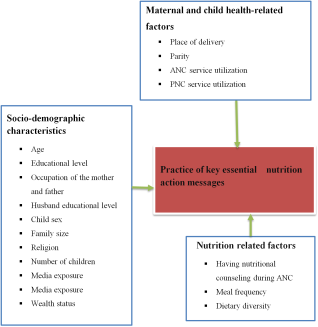
Figure 1. Conceptual Frame Work for Factors assOciated with Practice of Key Essential Nutrition Action Messages Among Mothers of Children from Birth up to 24 Months.
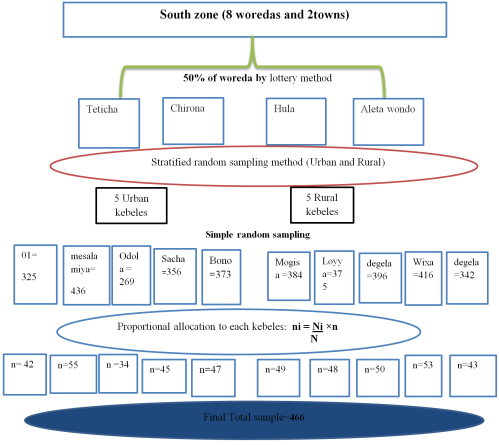
Figure 2. Schematic Presentation of Sampling Procedure of Practice of Key Essential Nutrition Action Messages and Associated Factors Among Mothers of Children from Birth up to 24 Month in Rural and Urban Kebeles of Southern Zone, Sidama Region, Ethiopia.
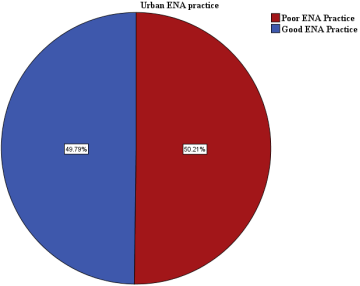
Figure 3. Practice of Essential Nutrition Action Messages (ENA) Among Mothers of Children from Birth up to 24 Months in Urban Kebeles of Southern Zone, Sidama Region, Ethiopia.
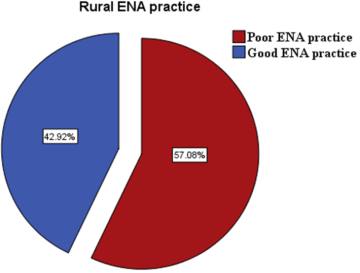
Figure 4. Practice of Essential Nutrition Action Messages (ENA) Among Mothers of Children from Birth up to 24 Months in Rural Kebeles of Southern Zone, Sidama Region, Ethiopia.




 Share This Article
 Twitter
 Linked In
 Facebook
 Copy
Copy Download